
What Is Candy Cane Candy Made Of?

Candy Cane Candy looks simple, but its striped surface hides a carefully controlled confectionery process. Most traditional recipes begin with sugar, corn syrup, water, peppermint flavoring, and approved food colors. Manufacturers cook the sugar mixture at high temperatures, reducing moisture until it becomes a clear, flexible candy mass. The warm mixture is then pulled, twisted, layered, and shaped into familiar hooks.

The National Confectioners Association reports that manufacturers produce approximately 1.76 billion candy canes annually in the United States. That figure shows how a small seasonal treat became a major confectionery category. NCA senior vice president Susan Whiteside has described candy canes as “one of the most iconic symbols of the holiday season.” Her observation matters because the product carries emotional value beyond its ingredient list. It smells sharply of peppermint. It cracks cleanly between the teeth.

However, not every Candy Cane Candy uses the same formula. Some products replace corn syrup, add natural colors, or introduce chocolate, fruit, or sour flavors. Ingredient labels remain essential because recipes differ by brand and market. The U.S. Food and Drug Administration requires ingredients to appear by weight, helping consumers identify the dominant components. Still, labels cannot reveal every manufacturing detail. Texture depends on cooking temperature, humidity, pulling time, and cooling speed. Small errors can create bubbles, dull stripes, or a brittle stick. This is where the explanation becomes less tidy. Candy canes are not merely sugar and peppermint. They are the result of heat, timing, equipment, and controlled uncertainty.
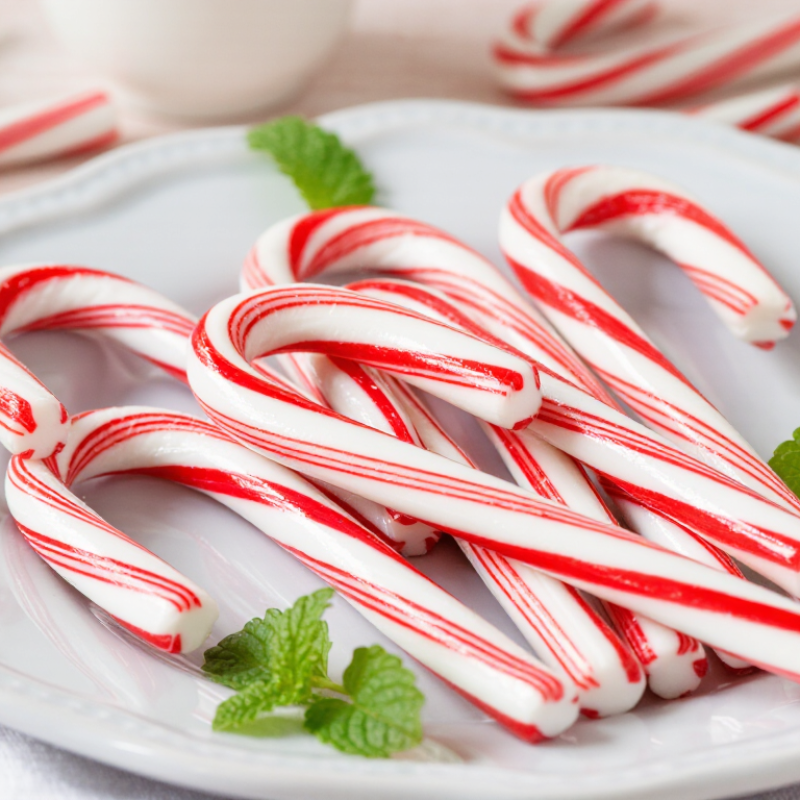
What Is Candy Cane Candy Made Of?

Basic Ingredients Found in Candy Cane Candy

What Is Candy Cane Candy Made Of?

Candy cane candy usually begins with sugar, corn syrup, water, and flavoring. These ingredients create the familiar hard, glossy texture. Sugar provides sweetness and structure. Corn syrup helps control crystallization, so the candy does not become gritty. Water dissolves the sugars during cooking, then gradually evaporates.

Peppermint flavoring gives many candy canes their cool, sharp taste. Some recipes use natural peppermint oil, while others use permitted flavor substances. Food coloring creates the red stripes. Titanium dioxide is no longer suitable for food use in some regions, so formulas may differ by market. The ingredient label matters.

The process is precise, but not perfect. Candy makers heat the syrup to the hard-crack stage, commonly near 149°C to 154°C. A few degrees can change the final texture. Too little heat may produce sticky candy. Too much can create a darker, burnt flavor.

The U.S. Food and Drug Administration requires packaged foods to list ingredients by weight, from highest to lowest under 21 CFR 101.4. That means sugar commonly appears first. USDA FoodData Central data for hard candy shows approximately 98 grams of carbohydrate per 100 grams, although individual candy canes vary. The National Confectioners Association also identifies sugar and corn syrup as standard foundations of traditional hard candy. The label can still surprise you. Some versions contain citric acid, gum arabic, or added waxes for texture and shine.

How Sugar and Syrup Create the Candy’s Structure

What Is Candy Cane Candy Made Of?

A candy cane begins with sugar, water, and syrup. Sugar supplies the solid framework. Syrup controls crystal growth and keeps the texture smooth. USDA FoodData Central entries for hard candy generally show about 95–100 grams of sugars per 100 grams. That number explains the candy’s firm, glass-like body. The International Sugar Organization’s Sugar Year Book 2024 reports global sugar production above 180 million tonnes. Sugar remains a remarkably scalable ingredient.

The mixture is heated until much of its water evaporates. Hard-candy production commonly reaches about 149–154°C. At this stage, the syrup enters the hard-crack range. Cooling transforms it into an amorphous sugar glass. Glucose syrup or invert syrup interrupts large sucrose crystals. The result feels smooth, not grainy. Small changes matter. A few degrees can create softness, brittleness, or unwanted crystallization. In practical confectionery trials, humidity is also difficult to control. Moist air can make the surface sticky within hours.

Peppermint flavor and approved coloring affect identity, but they do not create the structure. Sugar does that work. Syrup acts like a structural tool. It manages flexibility before cooling and stability afterward. The explanation is useful, though not perfect. Different sugar ratios, cooking equipment, and cooling speeds produce noticeably different results. Even a familiar striped cane can reveal process mistakes. A slightly cloudy center may indicate crystallization. A tacky surface may signal moisture absorption rather than poor ingredients.

The Role of Peppermint Flavoring and Food Coloring

Candy canes are mainly crystallized sugar, but peppermint flavoring gives them their recognizable cooling bite. The FAO/WHO JECFA specification for peppermint oil reports menthol at roughly 30–55% of its composition. Menthol activates cold-sensitive receptors in the mouth. That sensation feels cold, although the candy is not actually lowering oral temperature.

Too much tastes medicinal.

Manufacturers may use peppermint oil, natural flavor, or carefully formulated flavor substances. The label wording can vary by country. “Natural” does not automatically mean stronger, safer, or better. Flavor quality depends on purity, concentration, and storage. I once assumed sharper mint always meant more peppermint oil. That assumption is unreliable.

Food coloring controls the candy’s visual identity. The U.S. Food and Drug Administration’s Color Additives Status List includes nine certified synthetic colors permitted for food use, while other regions apply different rules. Color levels are usually tiny, yet they strongly influence expectations. A clear candy can seem less minty, even when its flavor is unchanged. That is a useful reminder: appearance can bias tasting.

Tips: Check whether the ingredient list names peppermint oil, menthol, or only “flavor.” Compare color requirements in your country. Avoid judging quality by brightness alone. A slightly uneven stripe may reflect simpler processing, not poorer taste.

What Is Candy Cane Candy Made Of? - The Role of Peppermint Flavoring and Food Coloring

Ingredient or Component Typical Form Primary Function Contribution to the Candy Cane Relevant Food-Science Note
Granulated sugar Sucrose crystals Main sweetener and structural material Provides most of the sweetness, mass, and hard-candy body When concentrated and cooled, sucrose forms a hard, glass-like candy structure
Corn syrup or another glucose syrup Viscous glucose-containing syrup Controls crystallization and improves texture Helps keep the candy smooth, clear, and less grainy Glucose and other sugars interrupt the formation of large sucrose crystals
Water Ingredient water used during cooking Dissolves the sugars before heating Allows the sugar mixture to be blended and heated evenly Most of the water is driven off during cooking, leaving a concentrated hard-candy mass
Peppermint flavoring Peppermint oil, natural flavor, or another approved flavor preparation Provides the characteristic mint aroma and taste Creates the cool, sharp flavor associated with traditional candy canes Peppermint oil commonly contains menthol and menthone, which produce minty sensory notes
Food coloring Approved water-soluble color additive or coloring preparation Creates the colored stripes or overall tint Usually produces red, green, or other decorative colors while the base remains clear or white Coloring changes appearance rather than sweetness, hardness, or peppermint intensity
Acidulant, when used Food-grade citric acid or another permitted acid Adjusts flavor balance Can add a mild tanginess that contrasts with the sweetness Not included in every formulation; the exact ingredient list varies by recipe
Air incorporated during pulling Tiny bubbles introduced into the hot candy mass Affects opacity and visual texture Helps create the white, opaque appearance of pulled candy The white portion is often created through mechanical aeration rather than a separate white pigment
Heat and cooling process Cooking, shaping, twisting, and cooling Develops the final shape and texture Turns the syrup into a firm, brittle, hook-shaped confection The finished texture depends on sugar concentration, temperature control, cooling, and humidity

Summary: A traditional candy cane is primarily a cooked sugar confection made from sucrose, glucose syrup, and water, with peppermint flavoring and food coloring added for its familiar taste and appearance. Exact ingredients and color sources can vary by recipe.

How Candy Cane Candy Is Cooked, Pulled, and Shaped

What Is Candy Cane Candy Made Of?

Candy cane candy begins with sugar, corn syrup, water, flavoring, and food coloring. Some recipes add peppermint oil for a cool, sharp finish. The ingredients look ordinary. The cooking process is not.

A confectioner heats the syrup until it reaches the hard-crack stage, usually 149–154°C. A calibrated thermometer matters because a few degrees can change the texture. Too cool, and the candy stays sticky. Too hot, and it tastes burnt. It is unforgiving. The hot syrup is poured onto an oiled surface, then divided while it remains flexible. One portion receives color, while the larger portion stays white.

Next comes the pulling stage. The candy is stretched, folded, and stretched again. This motion traps tiny air bubbles and creates the familiar satin-like appearance. The candy also becomes lighter and firmer. Gloves and careful handling are essential because the mixture can cause serious burns. Timing matters. If the candy cools too quickly, it cracks instead of bending.

The colored and white pieces are rolled into long ropes. They are twisted together by hand or with a simple shaping tool. Each rope is cut into short lengths, then curved at one end while still warm. That curve becomes the hook. My first attempt would likely produce uneven stripes; small temperature changes can do that. Even experienced makers inspect the surface for cracks, dull patches, or unwanted stickiness before wrapping each piece.

Common Variations in Candy Cane Ingredients and Flavors

What Is Candy Cane Candy Made Of?

A traditional candy cane starts with sugar, corn syrup, water, and a small amount of flavoring. The mixture is heated until it reaches a hard-crack stage. It then cools into a glossy, flexible mass before being pulled and twisted. This process creates the familiar striped shape and crisp snap.

Peppermint remains the classic flavor, but many candy canes now taste very different. Fruit versions may use natural or artificial flavors, food coloring, and added acids for a sharper finish. Cinnamon varieties can feel warm and spicy, while chocolate versions may include cocoa powder or cocoa flavor. Sour candy canes often contain citric acid, which leaves a bright, tangy coating on the tongue. Some formulas use plant-based coloring, though shades can vary between batches. I have noticed that stronger colors do not always mean stronger flavor. That assumption is easy to make, but often wrong.

Tips: Check the ingredient list for allergens, dairy, and coloring agents. If you prefer a vegan option, confirm the coating and flavor ingredients, not only the sugar base. Store candy canes in a cool, dry place. Humidity can make them sticky and dull. For children, choose smaller pieces and supervise eating, since hard candy can be difficult to manage. Settings matter. A candy cane left near a warm window may soften, bend, or develop a cloudy surface.