China’s fertilizer sector spans large integrated producers, regional suppliers, and specialists in nitrogen, phosphate, potash, and compound products. This guide to the Top 10 Chemical Fertilizer Manufacturers in China looks beyond headline capacity. It considers product range, manufacturing scale, quality controls, technical support, and the ability to deliver consistently. A bag’s label matters, but so do the granules inside, batch records, and delivery reliability.
Soil health still matters. Agricultural scientist Sir Albert Howard wrote, “The health of soil, plant, animal and man is one and indivisible.” His observation offers a useful lens for assessing Chemical Fertilizer producers: products should be considered alongside soil conditions, crop needs, and responsible nutrient use. A manufacturer’s size alone cannot establish product suitability. Nor does a broad catalogue guarantee reliable service.
No ranking is perfect. Company data can change, and public disclosures vary in detail. This overview therefore aims to provide a practical starting point, not a substitute for technical checks. Buyers should verify current specifications, certifications, supply terms, and local agronomic guidance before making decisions. The strongest choice may depend on the crop, region, and season—not just the company name.
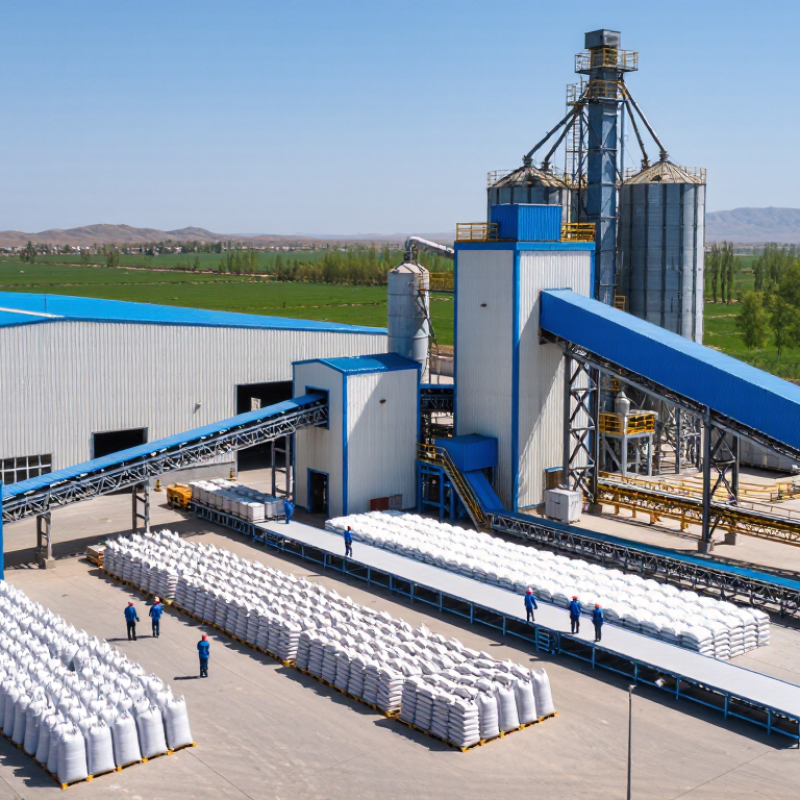
Top 10 Chemical Fertilizer Manufacturers in China
The Structure of China’s Chemical Fertilizer Industry
China’s fertilizer industry is built around three nutrient groups: nitrogen, phosphate, and potash. Nitrogen production depends heavily on ammonia, with coal an important domestic feedstock. Phosphate manufacturing clusters near phosphate-rock resources and processing facilities. Potash is different: domestic supply is more constrained, so imports help fill the gap. These differences shape where plants operate and how producers manage costs.
The National Bureau of Statistics reported about 55 million tonnes of chemical fertilizer output in 2023, measured by nutrient content. This figure shows the sector’s scale, but it does not describe every product moving through the market. Large integrated plants make basic nutrients and compound fertilizers, while smaller regional producers serve local soil and crop needs. A plant near a phosphate mine may face different transport costs from one supplying farms across distant provinces. Scale matters.
The International Fertilizer Association’s 2024 medium-term outlook identifies China as a major force in global fertilizer supply and demand. Domestic demand is shaped by crop calendars, soil conditions, and efforts to improve nutrient-use efficiency. Distribution can involve provincial wholesalers, local dealers, and agricultural service providers. The structure is not perfectly tidy: production capacity, resource access, and farm demand do not always align neatly. That gap deserves closer attention.
A credible ranking of China’s chemical fertilizer manufacturers should begin with verifiable evidence, not output claims alone. The International Fertilizer Association’s 2024 Medium-Term Fertilizer Outlook estimated global fertilizer consumption at 192.5 million tonnes of nutrients in 2023/24, up about 4% year over year. This recovery makes supply reliability especially relevant. However, global demand is context, not proof that any single Chinese producer performs well.
Useful checks include audited production capacity, several years of operating data, product test results, and on-time delivery records. Buyers can compare declared nutrient content with independent laboratory results and review whether shipment documents match the stated product grade. For environmental performance, examine disclosed energy and emissions data, rather than accepting broad “green” claims. No metric is perfect. Public reports may use different reporting periods or count capacity differently, so comparisons need care. A short factory visit can also reveal practical details: storage conditions, batch labels, and how staff handle quality complaints. These observations should support documented evidence, not replace it. Leading status is most defensible when performance is consistent, traceable, and clearly reported.
A practical screening framework compares manufacturers using verifiable indicators such as registered production capacity, product quality and regulatory compliance, research and development, distribution reach, and environmental performance. The scores show relative screening priority, not company results or an official ranking.
Profiles of ten major chemical fertilizer manufacturers in China reveal a sector shaped by feedstock access, process technology, and regional demand. China’s National Bureau of Statistics reported 55.4 million tonnes of chemical fertilizer production in 2023. The International Fertilizer Association’s 2024 outlook estimated global fertilizer consumption at 192.5 million tonnes of nutrients in 2023.
These figures describe different measures, so they should not be compared directly.
Not every company fits one category neatly.
Useful profiles compare production scale, raw-material access, product range, and environmental controls. They should also distinguish nameplate capacity from actual output.
That detail is often missed. Public disclosures can vary in scope, and production figures may use different reporting bases. Readers should check each manufacturer’s latest audited reports before treating figures as directly comparable.
A profile is informative, but never complete.
Top 10 Chemical Fertilizer Manufacturers in China
Main Fertilizer Products and Production Processes
China’s fertilizer manufacturers produce nitrogen, phosphate, potash, and blended NPK products. Common examples include urea, ammonium phosphate, compound granules, and water-soluble fertilizers. Product choice depends on crop needs, soil conditions, and application method. Not every factory makes every type. Urea production uses ammonia and carbon dioxide, while phosphate fertilizers typically involve processing phosphate rock with acids.
For NPK granules, measured nutrients are mixed, formed into granules, dried, screened, and cooled. Operators check particle size and nutrient content, since uneven granules can complicate field application. Some plants add coatings to reduce moisture uptake or improve handling. Processes and quality controls vary between facilities, so production capacity alone tells only part of the story. Small details matter. Energy use and wastewater treatment deserve attention, too, though public product sheets may not explain them clearly.
Tips: Request a current product specification and test certificate. Check nutrient percentages, granule size, moisture level, and storage guidance. For water-soluble grades, ask about solubility and residue. Compare batches, not just brochures. A clear answer about process controls is useful, but it should be verified against recent documentation.
| No. | Anonymous Producer Profile | Main Fertilizer Products | Typical Feedstocks | Established Production Process | Relevant Process or Quality Considerations |
|---|---|---|---|---|---|
| 1 | Integrated nitrogen fertilizer producer | Urea; ammonia-based nitrogen fertilizers | Natural gas or coal-derived synthesis gas; nitrogen; water | Hydrogen is produced from the feedstock and combined with nitrogen in a Haber–Bosch ammonia synthesis loop. Ammonia then reacts with recovered carbon dioxide to make urea, which is concentrated and formed into prills or granules. | Ammonia and carbon dioxide recovery, energy use, biuret content, moisture, and granule strength are monitored. |
| 2 | Phosphate fertilizer producer — MAP | Monoammonium phosphate (MAP) | Phosphate rock, sulfuric acid, ammonia | Phosphate rock is commonly processed with sulfuric acid to produce wet-process phosphoric acid. The acid is partially neutralized with ammonia, then the slurry is granulated, dried, and screened. | Product grade depends on nutrient analysis, moisture, particle-size distribution, and control of free acidity. |
| 3 | Phosphate fertilizer producer — DAP | Diammonium phosphate (DAP) | Phosphoric acid, ammonia | Phosphoric acid is neutralized with ammonia to a higher degree than in MAP production. The resulting slurry is granulated or ammoniated in a granulator, then dried and screened. | Ammonia-to-acid ratio, nutrient content, moisture, and granule size are important product controls. |
| 4 | Compound fertilizer producer — chemically granulated NPK | NPK compound fertilizers in different nutrient grades | Nitrogen, phosphate, and potash materials; may include ammonia, acids, or process water | Selected nutrient materials are proportioned and mixed. Depending on the formulation, granules are formed through ammoniation, chemical reaction, steam granulation, or a combination of these steps, followed by drying and screening. | Each formulation requires controlled nutrient ratios and uniformity; finished product is tested for nutrient content, moisture, and granule size. |
| 5 | Bulk-blended fertilizer producer | Bulk-blended NPK fertilizers | Separately manufactured nitrogen, phosphate, and potash granules | Dry granular components are weighed to a specified formula and mechanically blended. This is a physical mixing process rather than chemical granulation; the blend is then screened and packaged. | Component compatibility, similar particle sizes, accurate dosing, and prevention of segregation help maintain a uniform blend. |
| 6 | Ammonium sulfate producer | Ammonium sulfate | Ammonia and sulfuric acid, or ammonium-sulfate-bearing industrial by-product streams | In the direct route, ammonia is neutralized with sulfuric acid and the resulting solution is crystallized or concentrated. Other facilities recover ammonium sulfate from suitable industrial process streams, followed by purification and crystallization. | Feedstock route affects impurities and product characteristics; acidity, moisture, nitrogen content, and particle size are commonly checked. |
| 7 | Nitrogen fertilizer producer — ammonium nitrate | Ammonium nitrate fertilizer | Ammonia, air, water | Ammonia is oxidized with air to make nitric acid using the Ostwald process. Nitric acid is neutralized with ammonia to form ammonium nitrate solution, which is concentrated and converted into prills or granules. | Strict process controls are required for temperature, concentration, contamination prevention, and safe storage and handling. |
| 8 | Potassium sulfate producer | Potassium sulfate (SOP) | Potassium chloride and sulfuric acid in the Mannheim route | In a Mannheim furnace, potassium chloride reacts with sulfuric acid at high temperature to form potassium sulfate and hydrogen chloride gas. The solid product is cooled, processed, and screened; gas handling is required for the acid by-product. | Potassium and sulfate content, chloride residue, particle size, and management of hydrogen chloride are relevant controls. |
| 9 | Fused phosphate fertilizer producer | Fused calcium-magnesium phosphate fertilizer | Phosphate rock and magnesium- and silica-bearing materials such as serpentine | Mineral feedstocks are proportioned and melted in a high-temperature furnace. The melt is rapidly quenched, then dried and ground to produce a phosphate-bearing fertilizer. | Raw-material composition, furnace conditions, nutrient analysis, and final fineness affect product consistency. |
| 10 | Calcium nitrate fertilizer producer | Calcium nitrate; calcium-containing nitrogen fertilizer products | Nitric acid and a calcium-bearing material, commonly limestone or lime | A calcium-bearing feedstock is reacted with nitric acid to produce a calcium nitrate solution. The solution is clarified as needed, concentrated, and converted into a solid product by crystallization or granulation. | Calcium and nitrogen content, residual acidity, moisture, and storage conditions are managed according to product specification. |
| Note: Company identities are intentionally omitted. These rows summarize established fertilizer product and process types; they are anonymized process profiles, not a verified ranking of individual manufacturers. | |||||
China’s largest chemical fertilizer manufacturers maintain a broad industrial presence, with major production sites near ports, energy supplies, and agricultural markets. Their product mix commonly includes nitrogen, phosphate, potash, and compound fertilizers. A “top ten” ranking can vary, though, because published figures may compare revenue, output, or production capacity.
Recent investment has focused on more efficient equipment, emissions controls, automation, and nutrient products tailored to specific crops. At a plant, upgrades might include heat-recovery systems or sensors that track production conditions. Distribution networks also matter: fertilizer must reach farms in time for planting, not merely leave the factory. The picture is uneven. Progress differs by site, and announced capacity does not always equal actual output.
For buyers and industry observers, useful checks include reporting dates, product specifications, and whether figures cover a parent company or selected facilities. A cleaner production line is valuable, but it does not by itself show how responsibly a product performs across its supply chain. Claims about efficiency deserve careful comparison, especially when measurement methods differ. These details are easy to miss.