How to Choose the Best Soft Dog Food in 2026?
Choosing the best soft dog food in 2026 takes more than finding a texture your dog enjoys. The American Pet Products Association’s 2025 State of the Industry report estimated U.S. pet industry spending at $152 billion in 2024, reflecting how much attention owners give their pets’ care. But a popular product is not automatically the right meal for every dog. Soft dog food can be easier to portion or chew, yet texture alone says little about nutritional completeness.
Start with the label. Look for a statement that the food is complete and balanced for your dog’s life stage, and compare its calories per serving. Check the ingredient list, feeding directions, package condition, and the manufacturer’s contact information. The FDA explains that nutritional adequacy statements help indicate whether a food is intended as a complete diet or for supplemental feeding. AAFCO’s model nutrient profiles and feeding-trial standards also offer useful context, though AAFCO does not approve individual products. Details matter.
Your dog’s age, size, activity, dental comfort, and health history should guide the choice. A small tray may look convenient, but its calories can add up quickly; a rich-looking gravy does not prove superior nutrition. Transition gradually, monitor appetite and stool, and ask your veterinarian about specific dietary needs. No label tells the whole story. This guide will help you assess nutrition, texture, storage, and value with evidence—not packaging claims—so you can make a careful, practical choice.
What Soft Dog Food Is and How It Differs from Other Formats
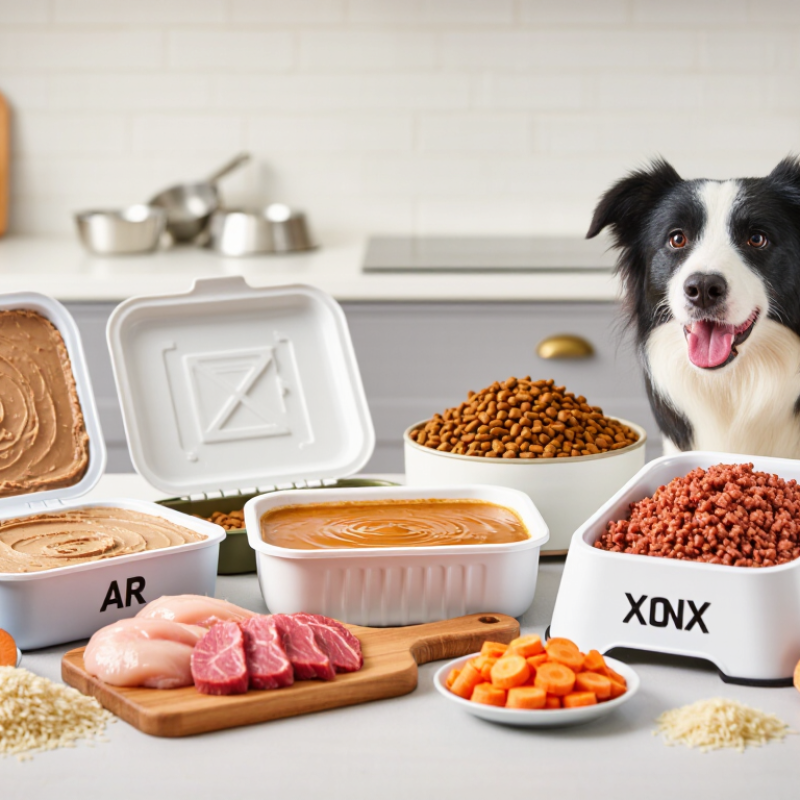
Soft dog food describes texture and moisture, not one single recipe or production method. It may come as a smooth pâté, soft loaf, stew, or refrigerated cooked meal. Press a fork into a serving, and it should yield easily; some varieties contain visible pieces of meat or vegetables. The category is not perfectly neat. Products with similar textures can differ greatly in ingredients, calories, and nutritional completeness.
Compared with dry kibble, soft food usually contains more moisture and needs less chewing. That can help dogs who struggle with hard pieces, though it does not automatically make a food easier to digest. Soft food also tends to spoil faster once opened. Follow the package’s storage directions, refrigerate promptly when required, and discard leftovers that have sat out too long. A damp spoon or sticky rim can be a practical reminder to keep the container clean.
Texture alone tells little about whether a food meets a dog’s needs. Check the label for a complete-and-balanced statement suited to the dog’s life stage, then compare feeding directions and calories per serving. Soft food may cling to teeth more than kibble, so it should not be treated as dental care. A dog with chewing problems, food sensitivities, or a sudden appetite change may need veterinary guidance. Even a familiar-looking meal can be nutritionally different.
How to Choose the Best Soft Dog Food in 2026? — What Soft Dog Food Is and How It Differs from Other Formats
“Soft dog food” is a general description of texture, not one standardized product category. It can refer to semi-moist, canned, or fresh food; recipes and nutritional profiles vary.
| Food format |
Typical texture and moisture |
How it differs |
Storage and serving |
What to check when choosing |
| Dry kibble |
Firm, crunchy pieces; commonly around 10% moisture, though products vary. |
Usually easy to measure and store after opening. Its crunchy texture is different from soft foods, but it should not be assumed to clean teeth effectively. |
Keep sealed in a cool, dry place and follow the package directions. |
Check the life-stage suitability, feeding guide, and nutritional adequacy statement. Provide access to fresh water. |
| Semi-moist food |
Soft, pliable pieces; often has more moisture than kibble and less than canned food. |
Designed to be soft without being a traditional canned loaf or chunks in gravy. Formulations differ, so texture and moisture are not uniform. |
Follow the label for storage. Once opened, reseal or refrigerate if the directions require it. |
Read the ingredient list and nutritional adequacy statement. Do not assume that a soft texture means the food is complete and balanced. |
| Canned or other wet food |
Soft loaf, pâté, chunks, or stew; commonly about 75% moisture, with variation by recipe. |
Higher moisture than dry food can contribute water to the diet. It is often easy to portion for dogs that prefer a soft texture. |
Refrigerate unused portions after opening and use them within the time stated on the label. |
Compare calories per can or serving, not just the amount in the bowl. Check whether it is complete and balanced or intended only for supplemental feeding. |
| Fresh refrigerated or frozen food |
Usually soft and moist; moisture content varies considerably among recipes. |
Often sold chilled or frozen and may be cooked or uncooked, depending on the product. “Fresh” alone does not describe its nutritional completeness or food-safety handling. |
Keep refrigerated or frozen as directed. Thaw and handle safely; promptly refrigerate unused portions according to the label. |
Check the feeding and storage instructions, calorie content, life-stage suitability, and nutritional adequacy statement. Ask a veterinarian about diets with special requirements. |
Practical selection tip: Choose a food labeled as complete and balanced for your dog’s life stage if it will provide the main diet. Compare calories, feeding instructions, and storage requirements; transition to a new food gradually when practical. Actual moisture and handling instructions vary by product, so use the package label as the final reference.
How to Match Food Choices to Your Dog’s Age, Health, and Activity
When choosing soft dog food, start with your dog’s life stage, not the texture. Puppies need food formulated for growth, while adult dogs need a balanced diet suited to maintenance. Senior dogs may benefit from softer meals if chewing is uncomfortable, but age alone does not determine their nutrient needs. Watch how your dog eats. A full bowl left untouched is useful information.
Health can change the choice. Dogs with kidney, digestive, or food-allergy concerns may need specific nutrients, so ask a veterinarian before making a major switch. Compare the nutrition statement and calories per can; soft food can be energy-dense, and portions are easy to overestimate. Small details matter. A shiny coat is encouraging, but it cannot confirm that a diet meets every need.
Activity matters, too. A dog that runs beside you daily may need more calories than a mostly indoor companion, though body condition is a better guide than guesswork. Check the feeding guide, then track weight and waist shape over several weeks. Transition gradually, mixing increasing amounts into the old food over about a week. I’d still recheck the plan after a change in routine; activity estimates are imperfect, even when the food label looks precise.
How to Evaluate Nutritional Adequacy and Ingredient Labels
A soft texture says little about nutritional quality; the adequacy statement says more. Look for wording that the food is complete and balanced for your dog’s life stage, not intended only for intermittent feeding. AAFCO’s Dog Food Nutrient Profiles list adult-maintenance minimums of 18% protein and 5.5% fat on a dry-matter basis. For growth and reproduction, the minimums are 22.5% and 8.5%, respectively. These figures are not targets for every dog, but they show why life stage matters. Check the AAFCO Official Publication profiles when comparing labels.
Moisture complicates comparisons. Soft foods contain more water, so their guaranteed-analysis percentages can look lower than dry foods’ percentages. Compare nutrients on a dry-matter basis, or ask a veterinary nutrition professional to help interpret the figures. Then check calories per can or serving; a small-looking portion may provide more energy than expected. Read the ingredient list, but don’t treat its order as a quality score. Ingredients are listed by weight, and water can affect their position.
I admit, labels can feel like puzzles. Still, the WSAVA Global Nutrition Committee’s nutrition guidance recommends checking who formulates a food, how quality is controlled, and whether calorie information is available. An adequacy statement is useful, not a guarantee that a food suits an individual dog. Consider age, body condition, appetite, and any veterinary dietary advice. A shiny label can’t replace those details.
How to Choose the Best Soft Dog Food in 2026?
Compare the guaranteed analysis with recognized nutrient benchmarks, and check the label’s nutritional adequacy statement.
AAFCO adult maintenance profile minimums shown on a dry matter basis: crude protein 18%, crude fat 5.5%, calcium 0.5%, and phosphorus 0.4%. These are minimum benchmarks, not a complete assessment of a food. For soft or canned food, moisture affects the guaranteed-analysis percentages, so compare foods on a dry matter basis. Also look for a nutritional adequacy statement for your dog’s life stage; ingredient names alone do not establish nutritional completeness.
How to Compare Product Quality, Packaging, and Feeding Costs
When comparing soft dog foods, start with the label, not the front-of-package claims. Check whether the ingredients and nutritional statement suit your dog’s life stage and any dietary needs. Note the calories per can, pouch, or measured serving; similar-looking portions can differ considerably. A label can still leave questions. Ask your veterinarian about specific health concerns.
Packaging affects both freshness and convenience. Look for intact seals, clear expiration dates, and a lot code you can keep for reference. A resealable pouch may reduce waste, while single portions can help with measuring. Consider your storage space, too. Once opened, follow the package’s storage instructions, and discard food if the container is damaged or the food smells unusual.
Compare feeding costs by estimating the daily amount your dog needs, rather than dividing price by package size. Use the feeding guide and calorie information as starting points, then adjust with veterinary advice and monitor body condition. Check the cost across a typical month. Not always easy. Dogs vary, and feeding guides are estimates; that can make a budget comparison less precise than it first appears.
How to Introduce Soft Dog Food and Monitor Your Dog’s Response
Change your dog’s food gradually, even when the new texture seems appealing. The 2021 AAHA Nutrition and Weight Management Guidelines recommend transitioning diets over about seven days. Go slowly. Begin with roughly one-quarter soft food mixed into the usual meal, then increase the share every day or two if your dog seems comfortable. A sensitive stomach may need a slower change, guided by your veterinarian. Keep portions based on calories, not bowl volume: soft food can look like more food while delivering a different amount of energy.
For a practical reference, the WSAVA Global Nutrition Toolkit estimates resting energy needs with the formula
70 × body weight in kilograms to the 0.75 power.
It is a starting estimate, not an exact feeding prescription; age, activity, and health affect real needs. During the switch, note appetite, stool consistency, vomiting, and energy. Check the next morning’s stool, too. A brief change can happen, but ongoing diarrhea, repeated vomiting, blood in stool, or refusal to eat merits veterinary advice. Keep opened food refrigerated as directed on its label, and discard leftovers that smell off. I once underestimated how quickly a soft meal warms beside a sunny window; small details matter.