Top Batch Cooking Equipment for Commercial Kitchens?
Choosing the right Batch Cooking Equipment can shape a commercial kitchen’s speed, consistency, and daily costs. Large kitchens rarely depend on one machine. They often combine tilting kettles, combi ovens, braising pans, planetary mixers, blast chillers, and hot holding cabinets. Each unit handles a different pressure point, from preparing sauces to cooling cooked meals safely.
Capacity matters, but it is not the only measure. A 100-litre kettle may look efficient, yet it can waste space when daily production is smaller. Experienced chefs also examine heating speed, batch recovery, cleaning access, controls, energy use, and staff movement. A kettle that cooks evenly but takes thirty minutes to drain may slow service. Small details become expensive during a busy lunch period.
This guide compares practical equipment choices for commercial kitchens. It considers menu volume, available floor space, labour skills, maintenance support, and food safety procedures. Manufacturer specifications provide a useful starting point, but real workflow testing remains essential. Ask suppliers for demonstrations, service records, warranty terms, and installation requirements. Do not trust impressive capacity figures alone.
There is no universal winner. A school kitchen, hotel, care facility, and central production site need different solutions. Some kitchens may also discover that better scheduling outperforms a larger machine. That is easy to overlook. The strongest investment usually balances output, reliability, operator confidence, and long-term ownership costs. This review aims to make that decision clearer, while recognising that every kitchen has compromises.
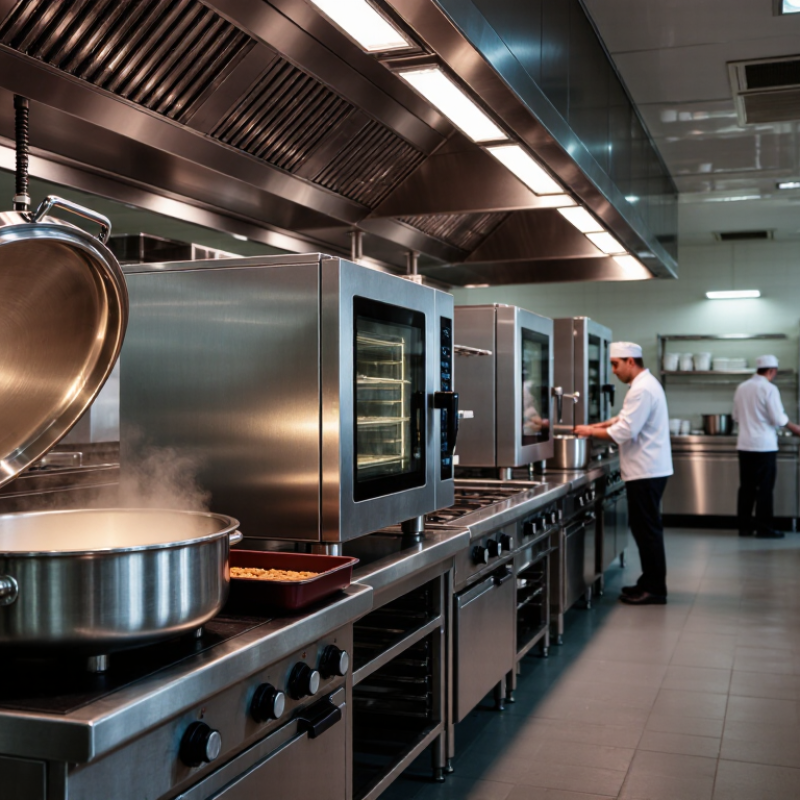
Types of Batch Cooking Equipment for Commercial Kitchens
Commercial kitchens need batch equipment that matches menu volume, texture, and cooling capacity. Steam-jacketed kettles suit soups, sauces, and stocks because indirect heat reduces scorching. Tilting braising pans handle stews, grains, and shallow frying with easier product transfer. Combi ovens support roasting, steaming, and controlled regeneration in one chamber. Pressure steamers cook vegetables and grains quickly while preserving moisture. Batch fryers remain useful for high-volume fried items, but oil filtration and recovery time require careful planning.
The 2024 National Restaurant Association industry report projects more than 1 trillion dollars in United States restaurant sales. That scale makes equipment uptime and labor efficiency serious purchasing factors. A 60-quart kettle may outperform two smaller units when recipes remain consistent. Yet, a larger vessel can create uneven mixing during low-volume production. Bigger is not always better. The 2022 FDA Food Code requires cooked food to cool from 135°F to 70°F within two hours, then reach 41°F within six hours. Blast chillers therefore matter when batches are prepared ahead. Heated holding cabinets should maintain safe temperatures without drying rice, meat, or vegetables. In real kitchens, the weakest step often determines the result. A short trial with actual recipes, batch weights, and staff movements reveals more than a sales specification.
Key Features to Compare Before Choosing Equipment
Top Batch Cooking Equipment for Commercial Kitchens?
Capacity is the first feature to compare, but it should match real production volume. A kettle that holds 100 litres may still perform poorly when filled beyond its practical limit. Check usable capacity, batch time, and recovery speed. Ask for test results with dense foods, not only water. Thick sauces expose weak heating zones quickly.
Heating consistency matters just as much. Look for even temperature distribution, adjustable controls, and reliable sensors. A clear display helps staff repeat recipes during busy service. However, digital controls are not automatically better. They can confuse new workers if menus are overly complex. Simple settings sometimes work best. Check whether operators can adjust heat without interrupting the batch.
Cleaning and maintenance deserve equal attention. Smooth internal surfaces, wide access points, and removable parts reduce residue around seals and corners. Inspect drain placement carefully. A slow or awkward drain can add minutes to every batch. Safety features should include secure lids, heat-resistant handles, pressure protection, and automatic shut-off systems where appropriate. Compare energy use during standby, heating, and holding. Also examine service access and replacement-part availability. A small fault should not stop production for several days. I would test the equipment with the kitchen team, not only the purchasing manager. Their feedback may reveal noise, awkward lifting, or cleaning problems that specifications miss.
Cleaning, Maintenance, and Operational Best Practices
Commercial batch cooking equipment performs well only when cleaning is built into each shift. Steam kettles, tilting pans, combi ovens, and mixers trap grease in seams and valves. Operators should remove food soil while surfaces remain warm, not hot. Use the approved detergent concentration and verify it with a test strip. Rinse fully, then air-dry parts on a clean rack. Never spray control panels or electrical connections. Small oversights become expensive failures.
At closing, inspect gaskets, drain screens, probes, hinges, and safety interlocks. A loose gasket can waste heat and lengthen cooking time. Record temperatures, cleaning times, and unusual noises in a simple log. Maintenance staff should lubricate moving joints only when the equipment manual permits it. Schedule descaling according to water hardness, not guesswork. We once treated scale as cosmetic; output later became uneven. That assumption was wrong. Corrective checks should follow every repair.
Tips: Assign one person to verify the final clean, but rotate the duty weekly. Photograph damaged seals before service begins. Keep spare scrapers, brushes, and labeled containers nearby. Train staff to report recurring residue, not hide it. Review the log during pre-shift meetings. If cleaning takes longer each week, investigate airflow, loading, or product buildup. Clean equipment is not automatically safe equipment. Test guards, alarms, and temperature readings before production.
Top Batch Cooking Equipment for Commercial Kitchens
Cleaning, maintenance, and operational best practices shown as scheduled actions per 30-day operating month, based on two production batches per day.
Clean food-contact surfaces after every batch, sanitize daily, inspect seals and safety controls weekly, and schedule a documented preventive-maintenance check monthly. Actual frequency should be adjusted for production volume, equipment instructions, and local food-safety requirements.