Choosing among the 2026 best real chicken dog food suppliers requires more than reading attractive labels. The word “chicken” may describe fresh meat, chicken meal, or a small flavoring ingredient. Those differences matter. A reliable supplier should explain its ingredient sources, processing methods, nutritional testing, and quality-control records. It should also identify where production occurs and how product batches can be traced.
Veterinary nutritionist Dr. Lisa M. Freeman has stated, “There is no one best diet for all pets.” That reminder shapes this guide. Real chicken dog food may suit many dogs, but individual needs still vary. Puppies, seniors, allergic dogs, and pets with medical conditions can require different nutrient profiles. A trustworthy supplier should support clear feeding guidance rather than promise universal results.
This comparison will examine suppliers through practical evidence. We will consider chicken quality, complete-and-balanced formulation, laboratory testing, recall history, transparency, and customer support. Packaging matters less than documentation. Look for precise ingredient details, not vague farm imagery. A clean facility is useful, but independent testing offers stronger confidence. Supplier claims can sound convincing. They are not always enough.
Our evaluation may not capture every regional difference or future reformulation. That limitation deserves attention. Still, careful comparison can reduce guesswork. The strongest suppliers combine consistent sourcing, qualified nutrition expertise, and honest communication. They make it easier for owners to understand what enters the bowl each day. That is the real standard behind the 2026 best real chicken dog food suppliers.
What Defines Real Chicken Dog Food in 2026
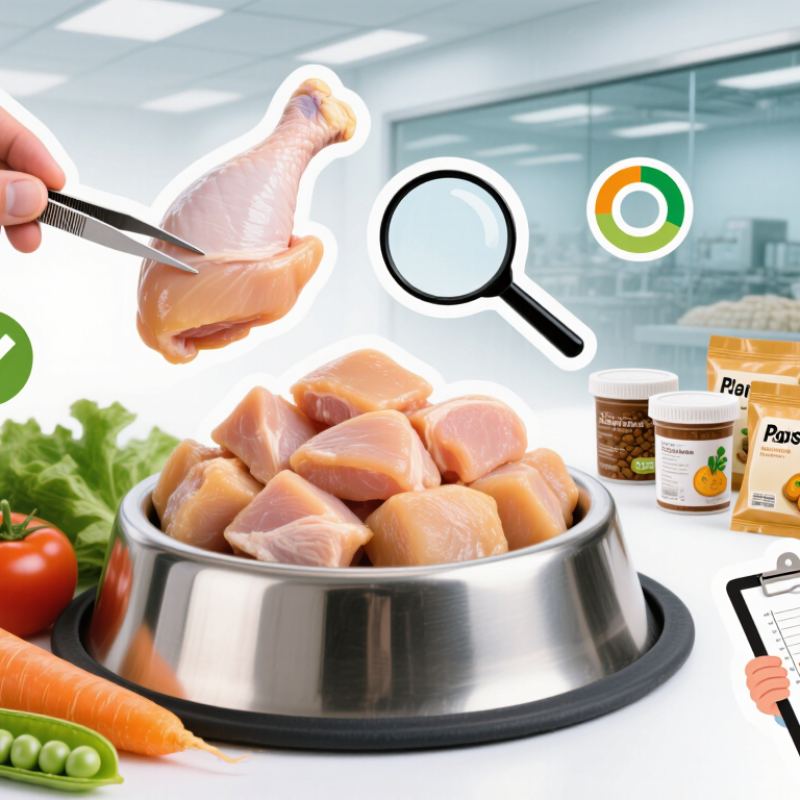
Real chicken dog food starts with a clearly named animal ingredient. The label should identify chicken, chicken meal, or both, rather than hiding behind vague terms like meat products. Fresh chicken supplies moisture and protein, while chicken meal provides concentrated protein after processing. Both can fit a sound recipe. The ingredient list alone is not enough.
Reliable suppliers should explain where their chicken comes from and how each batch is tested. Look for traceability records, pathogen controls, and nutrient analysis from qualified laboratories. A complete diet should meet recognized nutritional standards for the dog’s life stage. Protein percentage also needs context. A high number does not automatically mean better nutrition. Fat, essential amino acids, minerals, and calorie density all matter.
In practice, I check the package, then ask harder questions. Is the chicken named consistently across the recipe? Does the supplier publish feeding guidance and quality procedures? Can it explain recalls without vague language? These details reveal more than bright packaging. Some suppliers use fresh chicken heavily, but that may increase moisture and reduce protein concentration. I once viewed “fresh” as automatically superior; that assumption was too simple. Dogs differ, and sensitive digestion can change the decision. A recipe with a shorter ingredient list may still overlook individual needs. Real quality is measurable, traceable, and suitable for the dog eating it.
| Evaluation Dimension | What Qualifies as Real Chicken Dog Food | Supplier Evidence to Request | Recommended 2026 Benchmark |
|---|---|---|---|
| Primary chicken ingredient | Chicken, chicken meal, or another clearly identified chicken ingredient is listed by name rather than using a vague term such as “meat” or “animal protein.” | Complete ingredient specification, ingredient statement, and documentation showing the species source. | Species-specific chicken declaration with no unexplained generic animal-derived protein. |
| Chicken versus chicken meal | Chicken is fresh or frozen clean chicken tissue with water included; chicken meal is rendered chicken tissue with most moisture removed. Both can provide chicken protein when accurately declared. | Raw-material definition, processing description, moisture specification, and certificate of analysis. | The ingredient type is stated clearly, and marketing does not imply that fresh chicken and chicken meal are identical. |
| Named animal ingredients | Other animal ingredients, such as poultry fat or chicken liver, are identified by species instead of being grouped under broad terms. | Full formula, supplier declarations, and an explanation of every animal-derived ingredient. | No material animal ingredient is hidden behind an unnecessarily broad description. |
| Nutritional adequacy | The finished food is formulated for a defined life stage and provides a complete and balanced diet when fed as directed. | Nutrient profile, formulation records, feeding-trial information when applicable, and the applicable adequacy statement. | Life-stage-specific formulation aligned with recognized pet-food nutrition profiles, such as AAFCO or FEDIAF requirements. |
| Protein transparency | The guaranteed analysis reports crude protein, while the supplier can provide more detailed nutrient and amino-acid information when requested. | Laboratory analysis, protein-source breakdown, digestibility data, and batch-specific test results. | Published protein data is supported by current laboratory records and is not used as the sole measure of food quality. |
| Ingredient traceability | Chicken can be traced from the approved raw-material source through processing, manufacturing, packaging, and distribution. | Lot-code system, supplier approval records, origin documentation, and mock-recall results. | End-to-end traceability with documented recall procedures and retained production records. |
| Food-safety controls | The manufacturing process controls biological, chemical, and physical hazards associated with raw poultry and finished pet food. | Hazard analysis, preventive-control plan, sanitation records, pathogen testing, and corrective-action reports. | A documented preventive food-safety system with routine verification and batch release controls. |
| Testing for contaminants | The product is tested according to risk for pathogens, mycotoxins, heavy metals, oxidation, and other relevant contaminants. | Independent laboratory reports, sampling plan, test methods, limits, and out-of-specification procedures. | Risk-based testing with documented acceptance limits and traceable results for each production lot. |
| Processing and preservation | The supplier explains whether the food is dry, wet, freeze-dried, frozen, or gently cooked and identifies the preservatives used, if any. | Process flow chart, thermal-processing validation, shelf-life study, and preservative specifications. | Validated processing and shelf-life data rather than unsupported claims such as “fresh,” “natural,” or “human-grade.” |
| Label accuracy | The ingredient list, guaranteed analysis, calorie content, feeding directions, net quantity, and manufacturer information are presented accurately. | Label review, nutrient-calculation records, calorie testing or calculation method, and regulatory compliance documentation. | Label claims are consistent with the formula and meet the requirements of the target sales market. |
| Allergen and cross-contact management | The supplier identifies shared equipment, potential poultry cross-contact, and controls used to prevent unintended ingredient carryover. | Allergen-control plan, cleaning validation, production-sequencing policy, and change-control records. | Clear disclosure and validated controls for facilities producing multiple formulas or animal-protein types. |
| Quality consistency | Each production lot remains within defined specifications for nutrient content, moisture, texture, appearance, and microbiological safety. | Finished-product specifications, retention-sample policy, trend analysis, and customer complaint records. | Documented lot-to-lot quality control with measurable specifications and corrective-action tracking. |
| Ethical and sustainable sourcing | The supplier can describe poultry sourcing, animal-welfare policies, packaging choices, and environmental practices without making unverifiable claims. | Sourcing policy, third-party certifications where applicable, packaging material data, and sustainability reporting. | Specific, auditable claims supported by current documentation rather than broad environmental or welfare language. |
| Product suitability | The formula matches the intended dog population, including age, size, activity level, and any declared dietary purpose. | Target-animal rationale, feeding directions, calorie density, veterinary nutrition review, and product-use limitations. | Clear intended use and feeding guidance, with veterinary advice recommended for dogs with diagnosed medical conditions. |
| Documentation readiness | The supplier can provide current technical, regulatory, safety, and quality documents before commercial approval. | Technical data sheet, certificate of analysis, safety records, audit reports, insurance, and regulatory registrations where required. | Complete, current, version-controlled documentation with prompt responses to technical questions. |
Reference framework: ingredient-label transparency, preventive food-safety controls, traceability, and complete-and-balanced nutrition principles used in major pet-food regulatory and industry standards.